
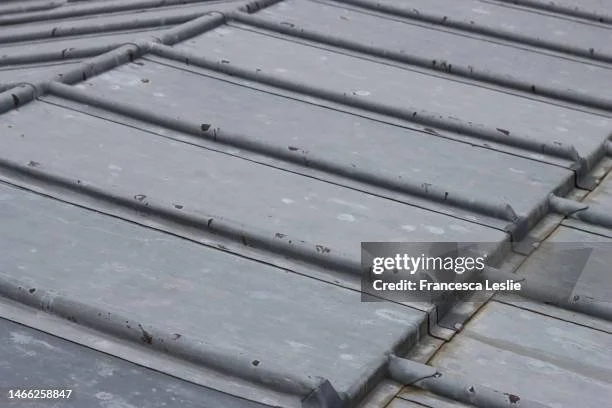
Expert Leadwork for Lasting Protection
Lead plays a vital role in keeping a roof watertight, and when it fails, water finds its way in quickly. Our experienced team carries out leadwork repairs, replacements and maintenance for homes and businesses in Sutton Coldfield, Lichfield and the surrounding areas. Whether your lead flashing has worn with age, been damaged by the weather or was poorly fitted in the first place, we’ll find the cause and fix it properly before it leads to further damage.
Leaks around chimneys, valleys, dormers and other roof junctions are often a sign that the leadwork needs attention. Using both traditional and modern techniques, we repair or replace it to leave you with a neat, watertight finish that protects your property for years to come.
Get in touch with our roofing team to find out more.
FAQ: Leadwork
-
Leadwork is the use of rolled lead sheet to waterproof the vulnerable areas of a roof. This includes flashings around chimneys, valleys, ridges, hips, abutments where a roof meets a wall, dormer cheeks and flat or small roof areas. Lead is flexible, so it can be shaped to seal awkward junctions that other materials can’t.
-
Flashing is a strip of lead that seals the joint where a roof meets another surface, such as a chimney, a wall or a window. It stops rain running into the gap. Because these joints are the most common places for leaks, the condition of the flashing matters a great deal.
-
Lead is extremely durable, weather-resistant and easy to work into complex shapes. It lasts for many decades, doesn’t rot or rust, and is the traditional choice for period and heritage buildings. Modern alternatives exist, and we can talk through the options if you’d like to compare them.
-
Look for leaks or damp patches near chimneys, dormers, valleys or where the roof meets a wall. On the outside, signs include cracked, split or lifting lead, sections that have slipped or sagged, gaps at the edges, holes, or sealant that has been used as a quick fix. A professional inspection is the best way to find out what’s going on.
-
Common causes include age, thermal movement (lead expands and contracts with temperature), fixings or sealant that have failed, lead that was laid too long or too thick for the area, and poorly fitted details. Repeated leaks often mean the original installation needs to be put right, not just patched.
-
It can work as a temporary measure, but it’s rarely a lasting repair. Sealant dries out and cracks, and it can hide the real problem. Properly fitted lead is the dependable solution.
-
It’s lead carbonate, a natural coating that forms when new lead is exposed to the weather. It’s harmless to the roof and often washes away, though it can leave streaks on tiles or brickwork below. Applying patination oil to new lead helps prevent this.
-
Rolled lead comes in graded thicknesses known as codes, from Code 3 up to Code 8. The right choice depends on where it’s used, such as flashings, valleys, flat roofs or ridges. We follow industry guidance to choose the appropriate code for each detail.
-
Yes. Lead can be used as a covering on smaller flat areas such as dormers, bay windows and porches. It needs to be correctly detailed, with the right falls, joints and fixings. For larger flat roofs, other systems are usually more practical and cost-effective.
-
The price depends on the amount of lead needed, the thickness, how complicated the details are, access and scaffolding, and whether it’s a repair or a full replacement. Lead prices also vary with the market. We’ll visit and provide a clear written quote.
-
Have it checked every few years and after severe weather, and keep gutters and valleys clear of leaves and debris. Avoid walking on lead, as it dents and can crack. Please don’t climb onto the roof yourself, and call us if you spot a problem.